
Home & Outdoor
How to Prepare Raw Wooded Land for Custom Home Construction
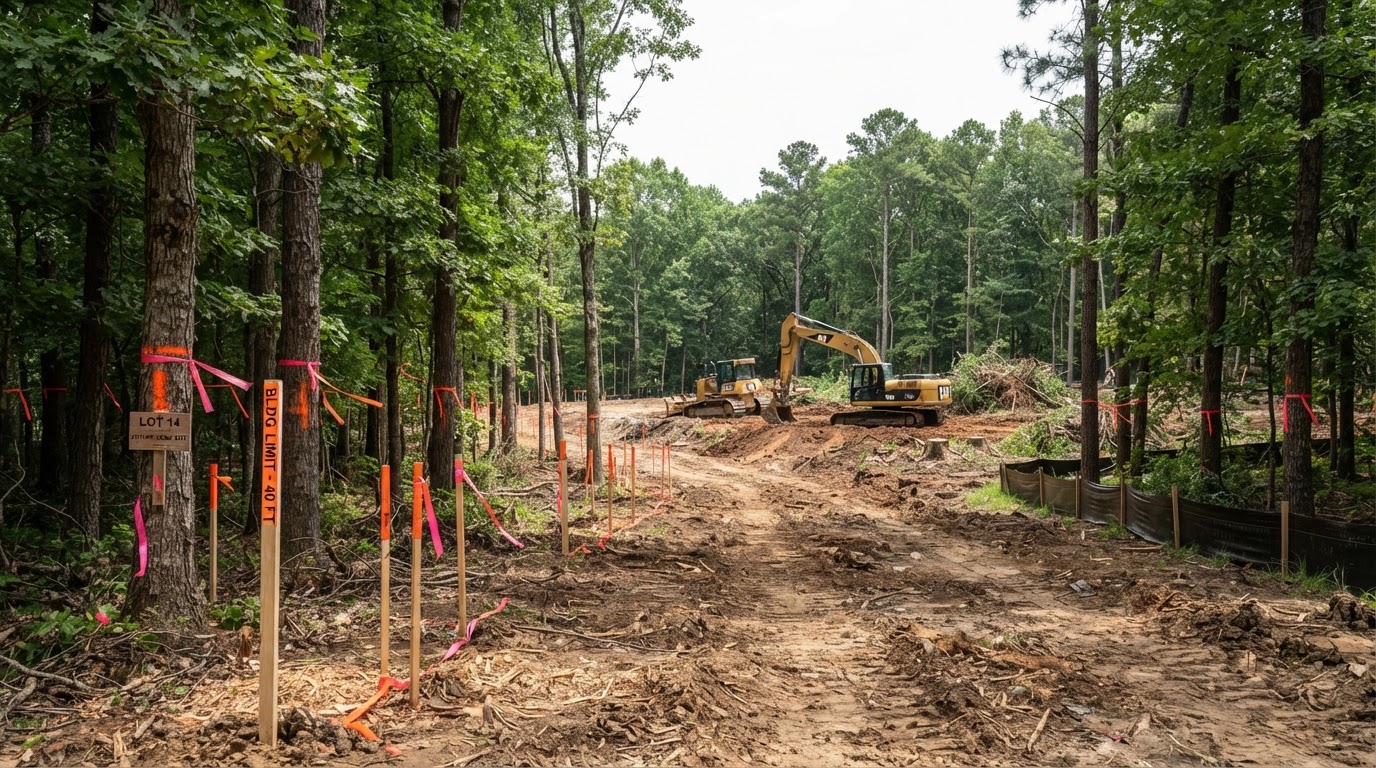
From boundary boundary surveys and municipal tree ordinances to soil boring tests and selective tree retention, here is your site clearing roadmap.
Conducting boundary surveys and tree preservation audits
Before any heavy track equipment breaks ground, invest in a certified boundary and topographic survey. Clearly staking property corners and building setback lines prevents costly boundary disputes with adjacent landowners.
Walk the acreage with your builder and landscape architect to identify legacy hardwood trees—such as mature white oaks, sugar maples, and black walnuts—that add tens of thousands of dollars in residential curb appeal if preserved intact.
Navigating local tree protection ordinances and silt fence requirements
Most jurisdictions enforce strict tree canopy replacement ratios and erosion control guidelines. Municipalities often require orange safety fencing erected along the critical root zone (CRZ) of protected trees before clearing commences.
Skilled residential lot clearing operators install proper geotextile silt fencing, hay wattles, and stabilized gravel construction entrances to prevent muddy stormwater runoff into public roadways and municipal storm drains.
Coordinating rough grading and utility right-of-way cuts
Clearing raw land in phases saves both time and machinery rental costs. Coordinate with utility providers to clear designated corridors for underground electric lines, municipal water taps, septic drain fields, and broadband conduits while the heavy clearing equipment is mobilized on-site.
Featured directory
Find what you need through our directory for residential lot clearing and lot clearing contractors (opens in a new tab). ResidentialLotClearing.com is part of the Directory Holdings portfolio.