
Healthcare & Medical
Understanding Mohs Micrographic Surgery: Procedure Steps, Indications, and Healing
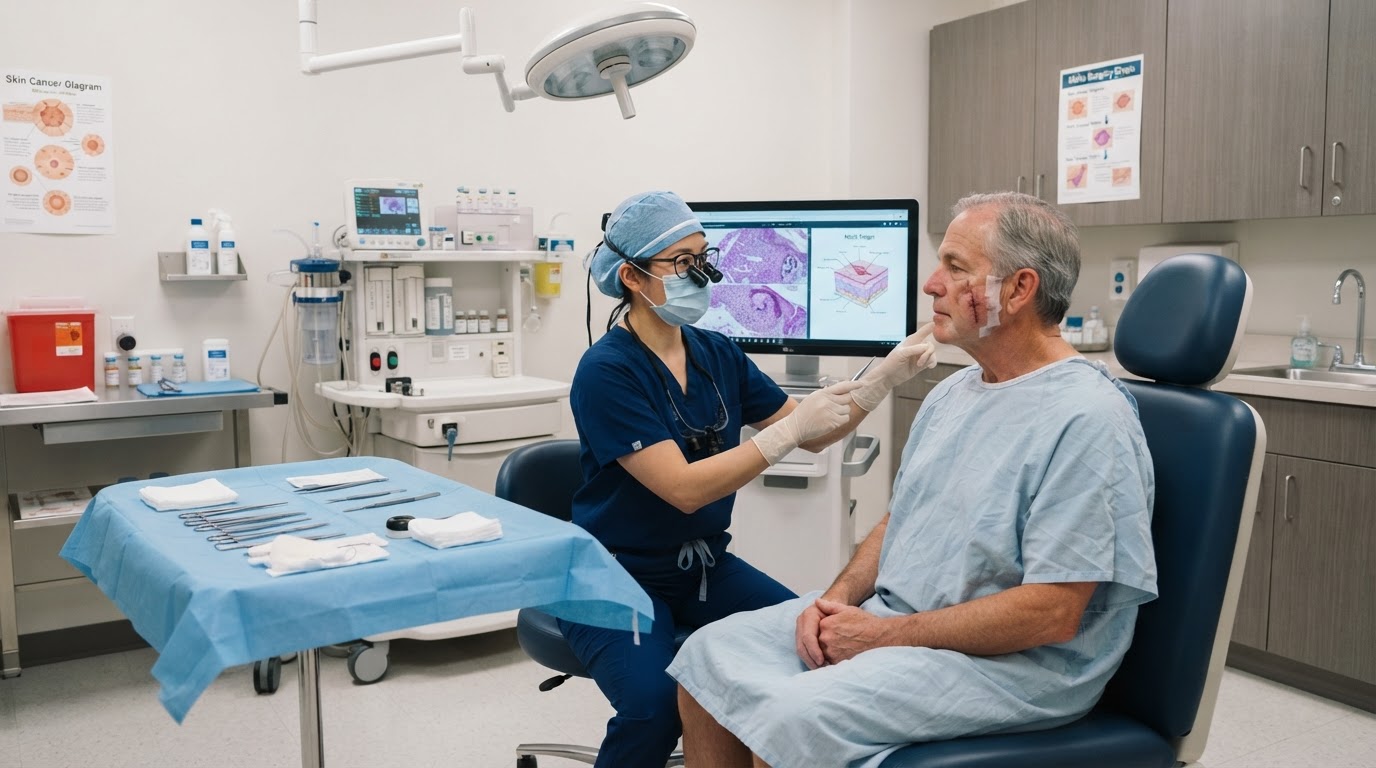
Learn why Mohs surgery offers the highest cure rates for basal and squamous cell carcinomas, how stages work, and what to expect during wound healing.
Why Mohs surgery is the gold standard for high-risk skin cancers
Developed by Dr. Frederic Mohs, micrographic surgery is a specialized outpatient technique designed for skin cancers located in cosmetically and functionally critical regions.
Because the surgeon examines 100% of the surgical margin under a microscope while the patient waits, Mohs surgery achieves cure rates up to 99% for primary basal cell carcinomas while sparing as much healthy surrounding tissue as possible.
Step-by-step through the staged surgical process
The procedure begins with local anesthesia and the removal of the visible tumor along with a very narrow margin of tissue.
While a temporary pressure bandage is placed, the tissue is mapped, frozen, and sectioned in an on-site laboratory. The Mohs surgeon reviews the slides; if cancer cells remain at any edge, the exact location is noted on the map, and only that precise area of tissue is removed in the next stage.
Wound reconstruction and cosmetic outcome planning
Once clear margins are confirmed, the surgeon evaluates the optimal repair strategy. Options include direct linear closure, local tissue rearrangement (skin flap), skin grafting, or allowing the wound to heal naturally by second intention.
Fellowship-trained surgeons listed on SkinCancerDermatologist.com have extensive training in advanced facial reconstruction to minimize visible scarring.
Post-operative care and long-term surveillance
Following surgery, keeping the wound clean, applying prescribed antibiotic ointment, and avoiding strenuous exercise for one to two weeks are critical for proper healing.
Patients who have had one skin cancer have an increased risk of developing additional lesions, making structured regular skin examinations essential.
Featured directory
Find what you need through our directory for skin cancer dermatologist, Mohs micrographic surgery and skin cancer excision (opens in a new tab). SkinCancerDermatologist.com is part of the Directory Holdings portfolio.