
Home & Outdoor
Driveway Resurfacing vs. Full Replacement: Cost, Lifespan, and When Each Makes Sense
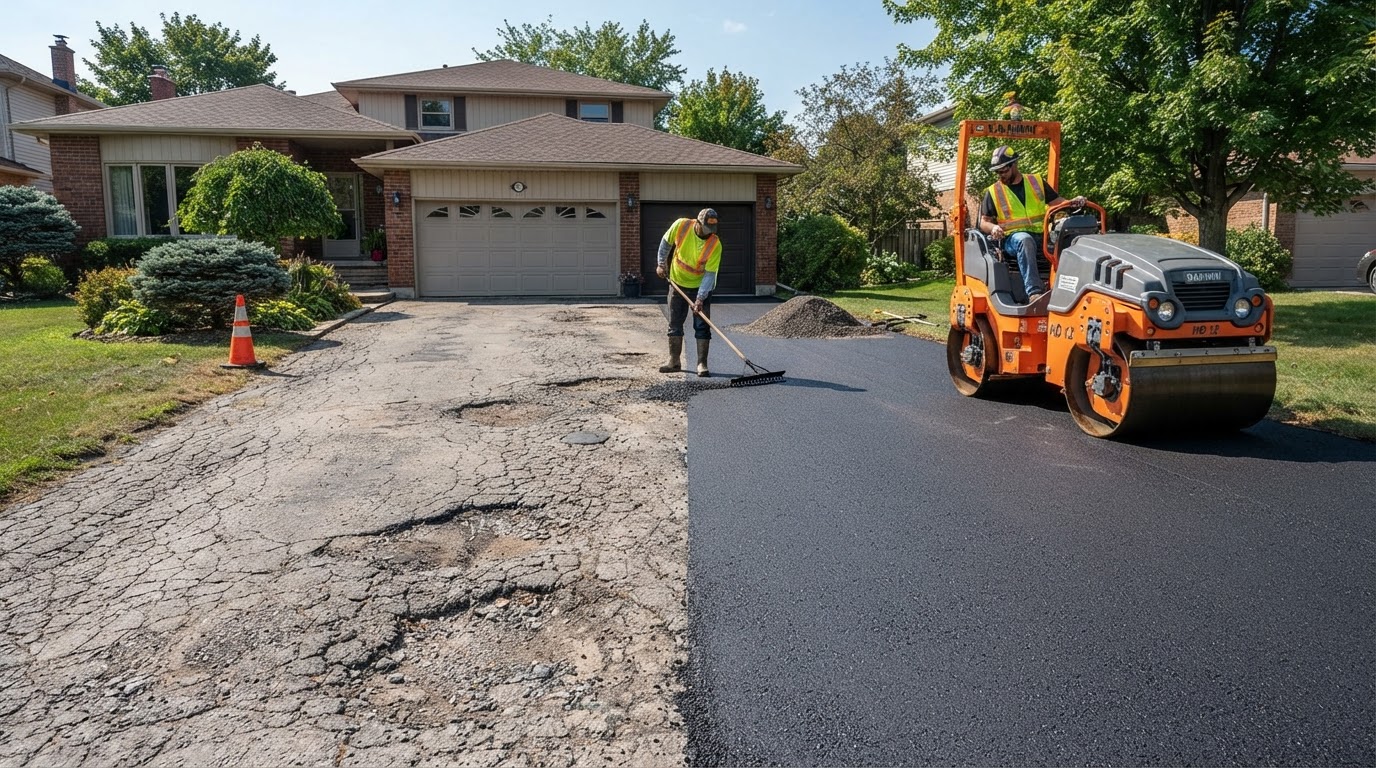
Tearing out an entire driveway is messy and expensive. Here is how to know whether resurfacing will restore your driveway or if full replacement is necessary.
What driveway resurfacing actually involves
Driveway resurfacing is the process of removing or repairing damaged surface layers and applying a fresh structural top coat without removing the compacted base beneath.
For asphalt, this typically involves milling off the top one to two inches and paving a fresh wearing course. For concrete, contractors clean, patch, and bond a polymer-modified cementitious overlay. In both cases, reputable driveway resurfacing contractors can save property owners 40% to 60% compared to full excavation.
Signs your driveway is a candidate for resurfacing
Resurfacing is ideal when damage is cosmetic or superficial: hairline surface cracks, minor pitting, weather fading, or small chips.
As long as the underlying foundation remains solid and well-drained, driveway resurfacing provides a pristine finish that performs like a brand-new installation.
When full replacement is unavoidable
If your driveway has widespread alligator cracking, deep foundational heaving, or severe drainage washouts, resurfacing will only mask the problem temporarily.
An experienced contractor will test subgrade compaction before recommending an overlay to ensure your investment lasts.
Featured directory
Find what you need through our directory for driveway resurfacing and driveway resurfacing contractors (opens in a new tab). DrivewayResurfacingContractors.com is part of the Directory Holdings portfolio.