
Commercial Equipment
How to Calculate Power Requirements for an Outdoor Event or Wedding
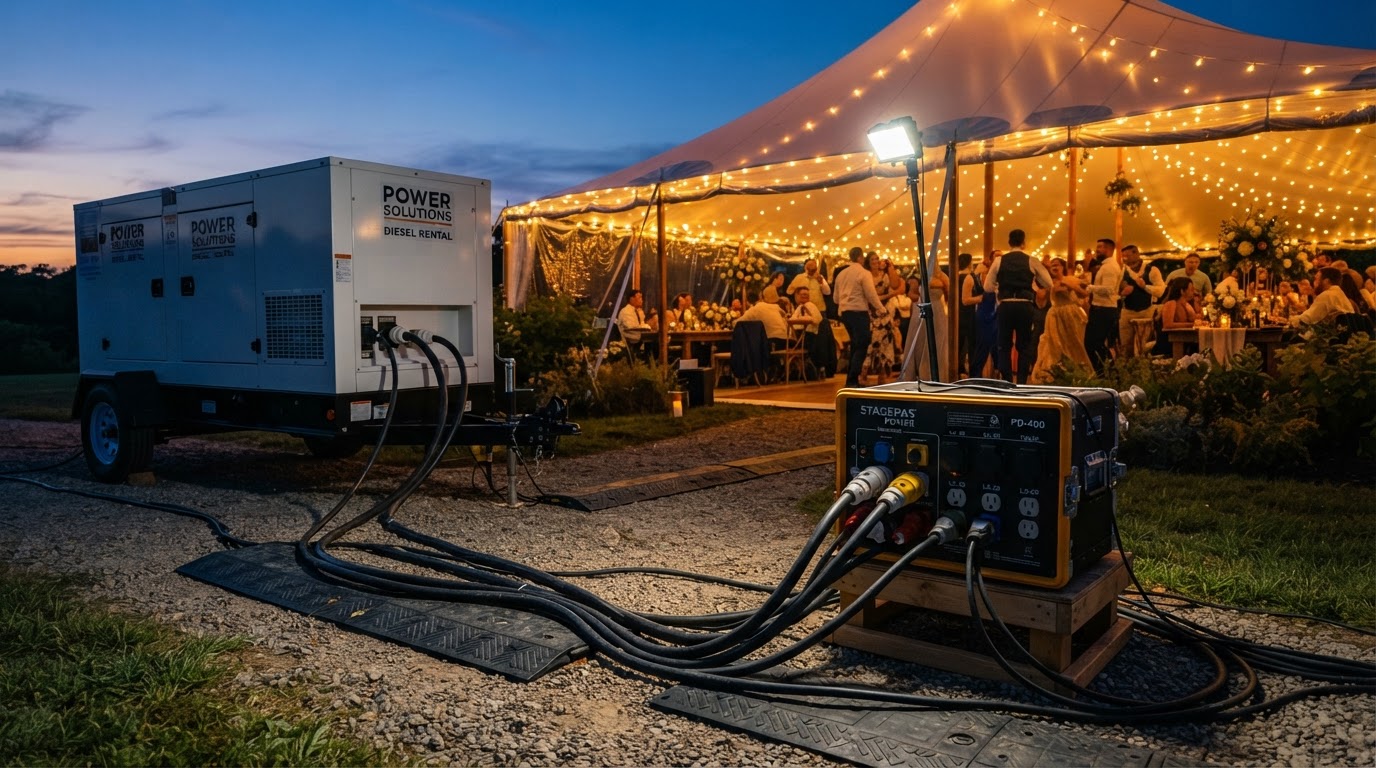
Avoid blown breakers and dark dance floors. Learn how professional event producers calculate total wattage and size temporary generators.
Auditing wattage demands across vendors
Outdoor events combine electrical demands from multiple independent vendors: caterers, audio-visual engineers, restroom trailer operators, and tent lighting crews. Sizing a generator starts with compiling a master wattage inventory.
Catering equipment, such as commercial coffee urns, hot boxes, and warming trays, frequently draws between 1,500 and 2,500 watts per appliance. Engaging reputable event generator rentals ensures you receive a load-balanced system that handles startup surges without dipping line voltage.
Understanding running watts versus starting wattage surges
Motorized appliances—such as HVAC blowers, air conditioning chillers, and luxury restroom water pumps—require up to three times their normal operating wattage during compressor startup.
Professional temporary power specialists incorporate a 20% to 30% safety head-room into their calculations, preventing voltage drop that could reboot delicate DJ computers or dim LED stage uplights.
Phase balance and distribution planning
Industrial event generators produce three-phase power (120/208V), which must be evenly distributed across legs using portable distribution panels (spider boxes) and heavy-gauge feeder cables.
Balancing the load protects the generator alternator and prevents harmonic distortion in audio-visual feeds.
Featured directory
Find what you need through our directory for event generator rentals and temporary power (opens in a new tab). EventGeneratorRentals.com is part of the Directory Holdings portfolio.