
Event & Crowd Safety
Planning Barrier Layouts for Festival Queues and Perimeter Fencing
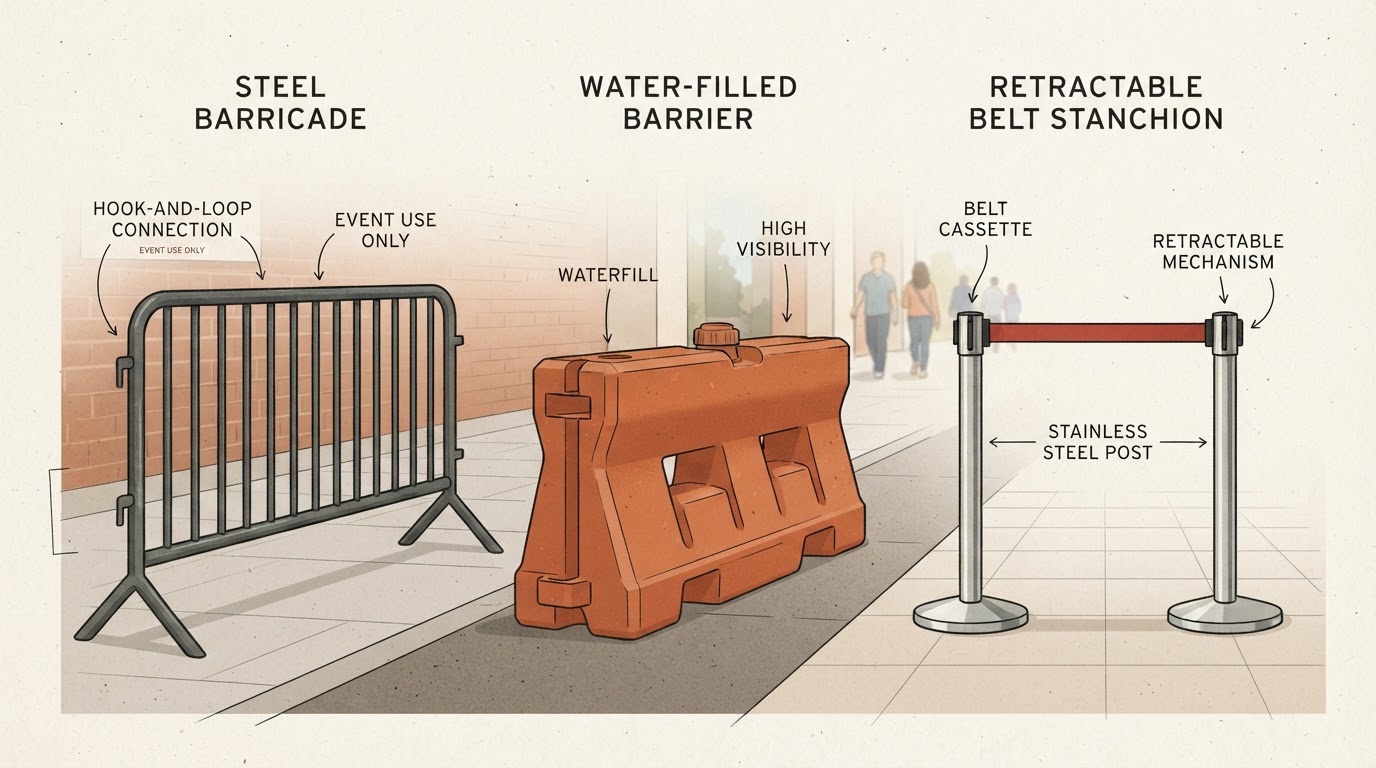
A good barrier layout keeps the crowd moving and the staff in control. Here is how to plan queue lines and perimeter fencing that work.
Design the queue before the crowd arrives
Queue lines only work if people can see where to go. Use barriers to create visible lanes from the entry point, with enough width that the line doesn't bottleneck. A single-file lane frustrates a crowd; a lane wide enough for two or three people keeps it moving.
Plan for a serpentine or switchback layout when space is tight. Barriers let you reshape the queue on the fly, but a planned layout means the crew sets it up once instead of reconfiguring under pressure.
Separate entry, exit, and staff paths
A common layout mistake is running entry and exit through the same lane. Keep them separate with a barrier divider so incoming and outgoing crowds don't collide. Staff paths should have their own gap or gate so crew can move without fighting the line.
Mark every gate and gap with signage or tape so the barrier crew knows which panels to open and when. A layout plan that shows entry, exit, staff access, and emergency lanes is what you hand the rental provider when you order.
Perimeter fencing sets the boundary
The perimeter barrier defines the event footprint — where the public can and can't go. Run it along roads, stage edges, restricted zones, and any area you need to keep clear. A continuous line with no gaps is what makes it work.
Anchor corners and endpoints so a barrier run can't be pushed aside. Most steel barricade panels interlock and accept fence posts or sandbags at the ends. Ask the provider what anchoring they include with delivery.
Featured directory
Find what you need through our directory for event barriers and crowd control (opens in a new tab). CrowdControlBarrierRentals.com is part of the Directory Holdings portfolio.